Milestone Reading Skills · Grades 3–5
How to Teach Making Inferences in Grades 3–5
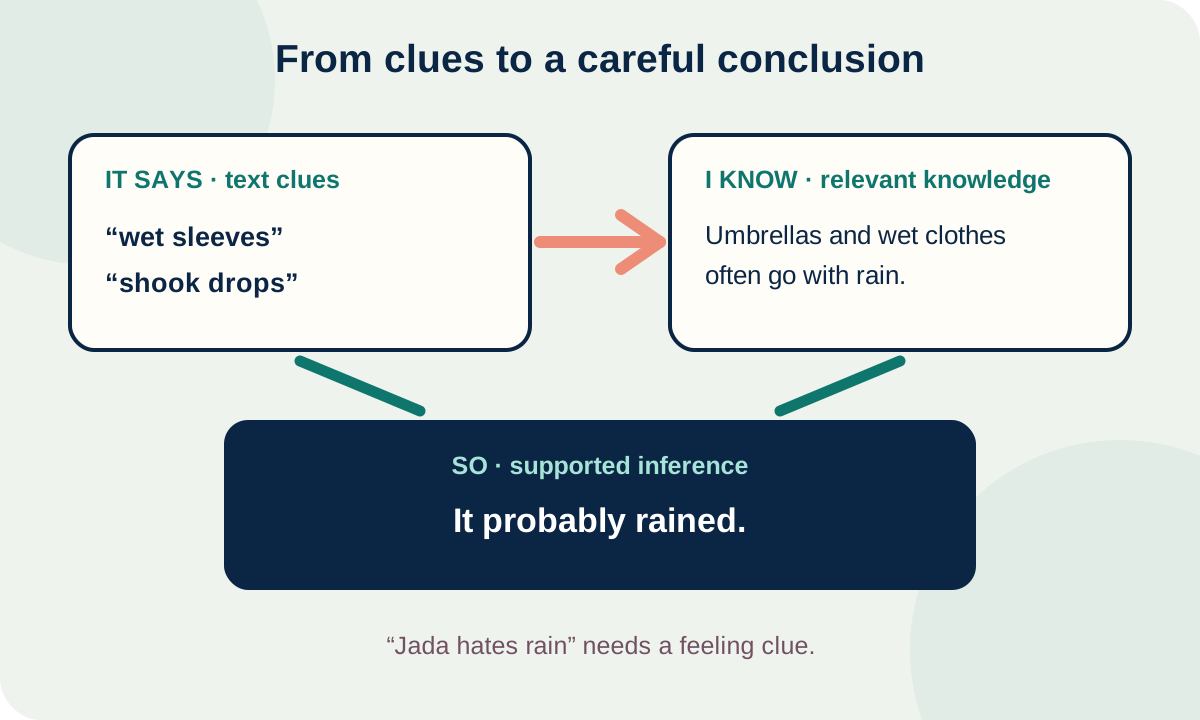
An inference is a reasoned idea the author leaves unstated. Give students a repeatable frame: ‘It says’ (a precise text clue) + ‘I know’ (relevant knowledge) = ‘So’ (an idea the clues support). Then ask whether another explanation also fits.
Teach it in five moves
- Read the whole short passage. Before asking for an inference, establish who is present, what happens, and what the text states outright. An inference adds to those facts; it does not replace them.
- Collect exact clues. Underline two details and quote or point to them. Ask ‘Which words made you think that?’ so the evidence stays visible to everyone.
- Connect relevant knowledge. Model a small, ordinary connection: ‘I know umbrellas and wet clothes often go with rain.’ Supply the knowledge when students have not had the same experience.
- State and justify the inference. Use ‘It says… I know… So I think…’ The ‘so’ should add a reasonable idea that the passage does not say directly, without claiming certainty.
- Test another explanation. Ask what else could fit and what clue would help decide. Students may offer different supported inferences; reject details that the text gives no reason to believe.
A worked classroom example
Jada stepped into the classroom with wet sleeves and a closed umbrella. She shook drops onto the mat and hung the umbrella by the door. The windows were streaked with water.
- It says: ‘wet sleeves,’ ‘shook drops,’ and ‘windows were streaked with water.’ Text clues: These are details the passage actually gives. Students can point to all three rather than rely on a vague feeling.
- I know: umbrellas and wet clothing often go with rain. So: it probably rained before Jada arrived. Supported inference: Rain is not stated, but several clues and common knowledge support it. ‘Probably’ leaves room for another explanation, such as a sprinkler.
- ‘Jada hates rainy days.’ Unsupported guess: The passage gives no clue about Jada’s feelings. Ask for a feeling clue before accepting that claim.
Common student errors
- Retelling a stated fact as an inference. ‘Jada had an umbrella’ is already in the passage. Ask what the umbrella and other clues suggest beyond the words on the page.
- Using a personal story instead of text evidence. A student’s experience can help explain a clue, but it cannot supply a missing story event or character feeling. Return to ‘What does this passage say?’
- Making a big claim from one weak clue. Ask for a second clue or a less certain wording. Wet sleeves alone could mean rain, a spill, or washing hands.
- Calling a plausible inference certain. Use ‘probably,’ ‘might,’ or ‘the clues suggest.’ Compare another explanation and decide which details each one fits.
Exit ticket
Read: ‘Omar yawned twice, rubbed his eyes, and rested his head on the desk.’ What might be happening? Name two exact clues, add one relevant thing you know, and write a cautious inference. Then name another possible explanation.
FAQ
What is an inference in reading?
An inference is a reasonable idea the text does not state directly. Readers combine precise clues in the text with relevant knowledge, then check that the idea fits the passage.
How do I stop students from guessing when they infer?
Require a text clue and an explanation of how it supports the idea. Ask for a second clue or a competing explanation when a claim is weak. A plausible personal story alone is not text evidence.
What if students lack the background knowledge needed for an inference?
Give the missing knowledge in one sentence, picture, or quick demonstration before asking them to connect it to the text. Do not score unfamiliar experience as a reading failure.
Can two different inferences both be reasonable?
Yes, if each fits the passage and has specific support. Ask which details each explanation accounts for and whether any detail contradicts it.
Can I use this inference lesson outside Canada?
Start with the free English-language lesson and compare its vocabulary, passage length and reasoning tasks with your students. The resources are labelled Grades 3-5; year-group names and local teaching objectives vary. Check the sample against your own curriculum before choosing the complete unit.
Keep teaching
Try the free Making Inferences mini-lesson from Milestone Teachers
Explore the Making Inferences Complete Unit from Milestone Teachers