Free public sample · Grades 3–5 · Teacher-led

Who is really telling the story?

Let students read first. Then cover the characters’ spoken words, reveal exact-text evidence, and test whether an I in dialogue makes the narrator first person.

Open The Bean Race One original scene · about 15 minutes See the teaching and curriculum fit

01 · Free Voices sample

Whose voice is telling the story?

1 Read first

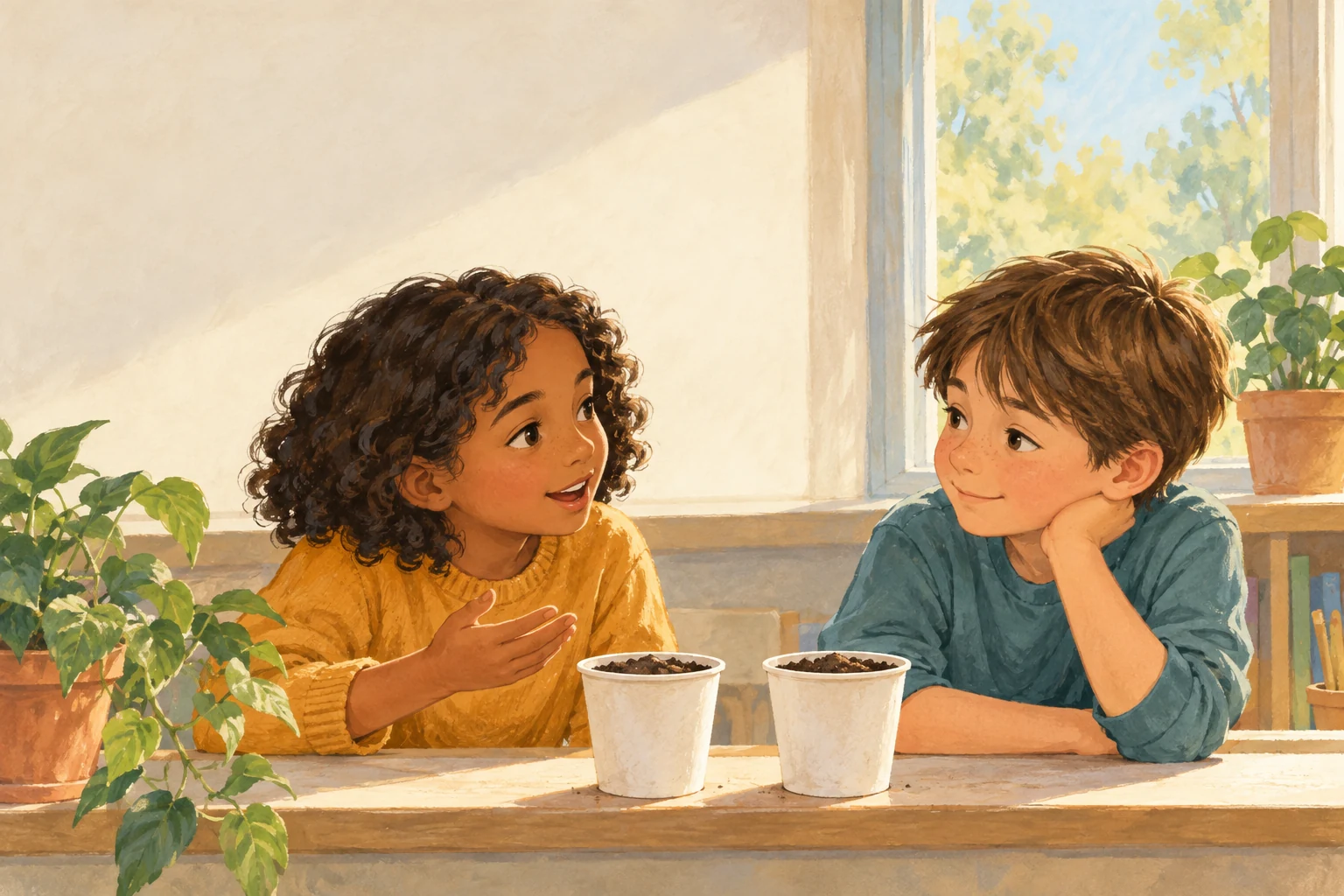
The Bean Race

Ask who is telling the story before revealing a layer.

4 Test the reasoning

Continue the claim checks

Four authored questions across the sample. Each explanation points back to the original passage.

Optional scaffoldAdd support for this group Open supports

Select only the help students need. The student print pack follows these choices.

Fresh transfer · clear the layers first

Teacher notes and pacingOpen notes

    No accounts, response collection, analytics or saved answers. Resetting or closing the page clears the activity.

    From a good discussion to the next lesson

    Know what you are teaching.

    Start with the free scene. Use students’ explanations to decide whether to revisit narration or move on to how a narrator’s knowledge and perspective shape a story.

    The Nora, Priya and Sam scenes below belong to the existing offline Story Lens companion. The direct offer on this page includes the complete print unit PDF.

    1. Try in this free sample

      Separate the narrator from a speaking character.

      In The Bean Race, look outside the speech marks. An I in dialogue does not, by itself, make the narration first person.

      Explore the free scene
    2. In the offline companion

      Ask how a narrator knows.

      Nora’s scene asks students to distinguish what she saw, heard, was told, or could not know. Explain the clue in the sentence.

    3. In the offline companion

      Compare two accounts of one event.

      Priya and Sam describe the same play from different positions. The 3D theatre and its text equivalent help students discuss what each person can know.

    Find the connection to your curriculum.

    These are focused teaching connections to the sample and full companion. Grade and year labels belong to their own systems; check the passages and your local expectations for your class.

    US Common CoreGrades 3–5 · Reading Literature
    Grade 3 · RL.3.6
    Identifying the narrator prepares students to compare their own point of view with a narrator’s or character’s. Add that comparison in discussion; narrator identification alone does not assess the whole standard.
    Grade 4 · RL.4.6
    Compare the third-person narration in the free Bean Race scene with first-person narration in Nora’s included scene. Ask students to explain the difference using the text.
    Grade 5 · RL.5.6
    The included Priya and Sam accounts practise explaining how a narrator’s position, information and interpretation influence the description of the same event.

    Official sources: RL.3.6 · RL.4.6 · RL.5.6

    Ontario Language, 2023Grades 3–5 · C1.6: Point of View
    Grade 3 · C1.6
    Use the sample and included scenes to identify first- and third-person narration. Extend by retelling a brief event through a different narrator to explore an alternative point of view.
    Grades 4–5 · C1.6
    Discuss first- and third-person narration and what each approach lets a reader know. The companion does not teach second person, so it covers part of this expectation.

    Official source: Ontario Language curriculum, Grades 1–8 (PDF)

    EnglandYears 3–6 · Key Stage 2 reading comprehension

    The included Nora scene and paired play accounts offer focused opportunities to infer from a text, justify an explanation with evidence, and discuss understanding. The free sample is a starting point for noticing how narration works.

    Choose the text challenge and level of support for your group. This is one contribution to KS2 comprehension; the programme of study covers a much broader range of reading.

    Official source: Department for Education: English programmes of study

    English-language materials. These connections are our teaching interpretation of the cited sources, not endorsement by the curriculum bodies or evidence of full-standard mastery.

    Teach it in print and offline

    Continue with the Point of View print unit

    Buy directly from Milestone Teachers. Your purchase includes the complete 45-page print unit PDF for grades 3–5. See current pricing and licence details before checkout.

    • Original 45-page print-and-go unit: 5 lessons, 9 passages, 24 task cards, 4 exit tickets, and 3 reteach activities with keys
    • Teacher keys and ready-to-print student pages

    Optional teacher workflow

    Bring your own AI, manually

    Story Lens has no integrated AI. Download a text brief only if your school allows your chosen provider and you choose to use one manually. Nothing is transmitted from this page. Review the provider’s privacy terms, never include student data, and check every draft before use.