Free teacher guide · Grades 2-4 place value
The 8 Place Value Misconceptions in Grades 2-4 (and how to reteach each one)
Each misconception below works like a rule: a student who follows it gets one predictable wrong answer. For each one you get the exact wrong answer, a diagram drawn to scale, a 10-second way to spot it, a 3-step small-group reteach and the research source.
At a glance
| # | Misconception | Example | Wrong answer | Correct | Standards |
|---|---|---|---|---|---|
| 01 | Writing each part of a number name in fullHundry | Write three hundred twenty-five as a number. | 30025 | 325 | 2.NBT.3, 4.NBT.2 |
| 02 | Leaving out the zero that holds an empty placeSkippy | Write two hundred four as a number. | 24 | 204 | 2.NBT.1, 2.NBT.3 |
| 03 | Reading a digit at its face valueFacer | What is the value of the 4 in 342? | 4 | 40 | 2.NBT.1, 4.NBT.1 |
| 04 | Reading base-ten groups in the order they sitShuffy | What number do the base-ten blocks show? | 427 | 274 | 2.NBT.1, 2.NBT.3 |
| 05 | Cramming ten or more into one place instead of tradingCrammy | Write the number for 6 tens and 17 ones. | 617 | 77 | 2.NBT.1, 2.NBT.8, 3.NBT.1 |
| 06 | Comparing numbers by the first digit onlyFirsty | Which number is greater: 89 or 302? | 89 | 302 | 2.NBT.4, 4.NBT.2 |
| 07 | Comparing numbers by the last digit onlyLasty | Which number is greater: 452 or 419? | 419 | 452 | 2.NBT.4, 4.NBT.2 |
| 08 | Rounding by chopping off the endChoppy | Round 57 to the nearest ten. | 50 | 60 | 3.NBT.1, 4.NBT.3 |
How to use this guide
Give a short check where every wrong choice is the answer one misconception gives, so a wrong answer names the misconception (the design Eedi describes for diagnostic questions (Eedi Help Centre)). Group students by misconception, write the date on the group, and reteach one misconception at a time. The reteach puts a wrong example next to a right one on purpose: in a study of decimals, students who compared correct and incorrect examples learned more than students who compared two correct examples (Durkin & Rittle-Johnson, 2012). Name the error, never the child: say “Biggy tricked me”, never “you're a Biggy”. Carol Dweck has warned against educators blaming children's mindsets for their failure to learn (Dweck, 2016, Edutopia).
Every reteach below follows the same five moves, about 15 minutes with 2-6 students:
- Meet. show the monster's worked example. Students vote silently. Do not correct yet.
- Catch. two friends, one right, one tricked. Ask: "Which friend is right? How do you know?"
- Beat. build the right idea with a model (base-ten blocks, a place-value chart or a number line) and say the catchphrase together.
- Prove. three practice items with the model on the table.
- Trap. two exit items that the monster gets wrong. Collect them. They are a check, not a grade.
How this guide was made. Every worked example on this page was computed from a written rule for that misconception (the correct method with exactly one step replaced by the trick) and checked by a script that fails if a printed answer, a diagram or a quoted instruction does not match. Every diagram is drawn to exact scale from the example's numbers. Every research claim links to a source that was opened and read; the evidence status under each misconception says how strong that evidence is.

Misconception 1: Writing each part of a number name in full
Hundry “Writes each part of a number name in full, side by side.”
What the student does. The student writes the number they hear part by part, each part in full, side by side, so the zeros of the hundred stay in.
Hundry's answer 30025
Correct answer 325
Hundry says: “I heard three hundred, so I wrote 300. Then I wrote 25.”
Catch it: which friend is right?
Write five hundred eight as a number. Which friend is right? How do you know?
AvaTricked by Hundry
5008
“Five hundred is 500. Then I wrote the 8.”
BenRight
508
“Five hundreds, no tens, 8 ones. One digit in each place.”
Contrasting a right and a wrong answer is the CATCH move of the reteach.
Spot it in 10 seconds
The numeral has more digits than the number name needs.
Say it together: Stack it, don't string it!
Reteach in 3 steps
Stack the parts. Each place holds one digit, so the tens and ones sit on top of the zeros of the hundred.
- Lay the 300 card down. Lay the 20 card on top, lined up on the right. Then the 5 card.
- Say: The 25 covers the zeros. Three digits, three places: 325.
- Say it together: Stack it, don't string it!
Still stuck? Say the number, then build it with arrow cards before writing it. Count the digits: a hundreds number has 3.
Standards
- CCSS 2.NBT.3
- CCSS 4.NBT.2
- Ontario Gr 3 B1.1
- Ontario Gr 4 B1.1
Evidence
The Minnesota STEM Teacher Center lists this exact error: three hundred twenty-five written as 30025 (Minnesota STEM Teacher Center, 2.1.1A). Herzog and Fritz call wrong compositions such as 10002 for 1002 syntactical errors, in a German-speaking sample (Herzog & Fritz, 2022).
Evidence status: Curriculum framework plus a study; the rule gives the source's own example.
Misconception 2: Leaving out the zero that holds an empty place
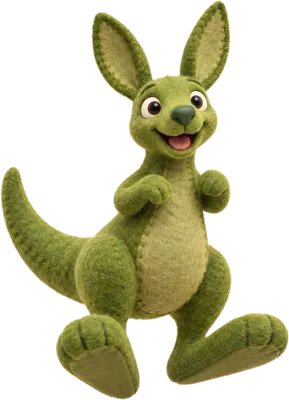
Skippy “Leaves out the zero that holds an empty place.”
What the student does. The student leaves out a zero inside a number when a place is empty (zeros at the end are kept).
Skippy's answer 24
Correct answer 204
Skippy says: “There are no tens, so I skipped them.”
Catch it: which friend is right?
What number do the base-ten blocks show? Which friend is right? How do you know?
MiaTricked by Skippy
36
“3 flats and 6 cubes, so 3 and 6.”
JonRight
306
“3 hundreds, 0 tens, 6 ones. The 0 holds the tens place.”
Contrasting a right and a wrong answer is the CATCH move of the reteach.
Spot it in 10 seconds
The numeral is a digit short, and the missing digit is a zero inside the number.
Say it together: Zero holds the place!
Reteach in 3 steps
Zero holds the place. Put the number on a place-value mat; every place gets a digit, even an empty one.
- Build 306 on the mat: 3 flats, an empty tens column, 6 cubes.
- Say: The tens column is empty, so we write 0. Without the 0, the 3 slides into the tens place.
- Cover the 0 with your finger. Ask: What number is left? (36.) Is that the same as 306? Say it together: Zero holds the place!
Still stuck? Use a place-value mat every time. Name each column out loud: hundreds, tens, ones. An empty column gets a 0.
Standards
- CCSS 2.NBT.1
- CCSS 2.NBT.3
- Ontario Gr 3 B1.1
- Ontario Gr 4 B1.1
Evidence
Price records a child writing two hundred and four as 24 (Price, 2002). NCII lists zero as a common difficulty: 602 is not the same as 62 (NCII (AIR), p. 3). Onal and Cilingir Altiner treat reading 206 as 26 as a misconception (Onal & Cilingir Altiner, 2021).
Evidence status: A study plus two further sources.

Misconception 3: Reading a digit at its face value
Facer “Thinks a digit, or a block, is worth only its face: the 4 in 342 is just 4.”
What the student does. The student treats a digit as worth only its face, ignoring the place it sits in; the same trick counts each rod or flat as a single one.
Facer's answer 4
Correct answer 40
Facer says: “A 4 is a 4. It is worth 4.”
Catch it: which friend is right?
What number do the base-ten blocks show? Which friend is right? How do you know?
SamTricked by Facer
10
“I counted the blocks: 2, 3 and 5 is 10 blocks.”
ZoeRight
235
“A flat is 100 and a rod is 10: 200, 30 and 5.”
Contrasting a right and a wrong answer is the CATCH move of the reteach.
Spot it in 10 seconds
A single digit is written where the question asks for that digit's value.
Say it together: Where it sits is what it's worth!
Reteach in 3 steps
Where it sits is what it's worth. Ask which place the digit is in: a 4 in the tens place is 4 tens, 40.
- Write 342 in a place-value chart. Point to each digit and say its value: 300, 40, 2.
- Show 4 rods. Say: 4 tens, 10, 20, 30, 40. The 4 in 342 is worth 40.
- Say it together: Where it sits is what it's worth!
Still stuck? Build the number with blocks and trade a rod for 10 cubes. Count the cubes: a rod really is 10.
Standards
- CCSS 2.NBT.1
- CCSS 4.NBT.1
- Ontario Gr 3 B1.1
- Ontario Gr 4 B1.1
Evidence
Price found many students gave a face-value reading of digits, and calls face-value thinking possibly the most common misunderstanding of multi-digit numbers held by young children (Price, 2002). NCII: in 312, the 1 represents 1 ten, not 1 one (NCII (AIR), p. 3). The Minnesota framework describes children seeing 4 bundles of ten as 4 single units (Minnesota STEM Teacher Center, 1.1.1A).
Evidence status: A study plus two further sources.

Misconception 4: Reading base-ten groups in the order they sit
Shuffy “Reads the groups in the order they sit, not by what they are.”
What the student does. The student writes the digits in the order the groups are shown or named, not by the size of each place.
Shuffy's answer 427
Correct answer 274
Shuffy says: “I read them in order: 4, 2, 7.”
Catch it: which friend is right?
Write the number for 3 tens, 8 ones and 5 hundreds. Which friend is right? How do you know?
NiaTricked by Shuffy
385
“I wrote them in order: 3, 8, 5.”
OmarRight
538
“5 hundreds go first, then 3 tens, then 8 ones.”
Contrasting a right and a wrong answer is the CATCH move of the reteach.
Spot it in 10 seconds
The digits follow the order of the blocks or words, not hundreds, then tens, then ones.
Say it together: Sort by size, then say it!
Reteach in 3 steps
Sort by size, then say it. Put every group in its own column on a place-value mat, biggest place on the left.
- Put the mixed-up blocks at the top of the mat.
- Move each group into its column: flats to hundreds, rods to tens, cubes to ones.
- Read the mat left to right: 2 hundreds, 7 tens, 4 ones is 274. Say it together: Sort by size, then say it!
Still stuck? Give each place its own color of paper. Students drop each group on its color before they write anything.
Standards
- CCSS 2.NBT.1
- CCSS 2.NBT.3
- Ontario Gr 3 B1.1
- Ontario Gr 4 B1.1
Evidence
Price lists errors in which children regarded the position of blocks as significant; one child used 2 ones and 8 tens to represent 28 (Price, 2002).
Evidence status: One small study (16 Year 3 students).
Misconception 5: Cramming ten or more into one place instead of trading
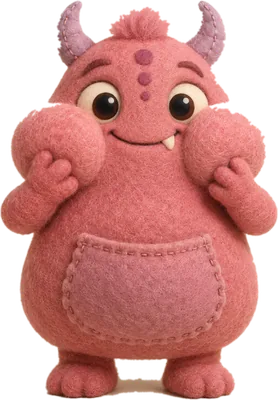
Crammy “Crams 10 or more into one place instead of trading.”
What the student does. The student writes a count of ten or more into a single place instead of trading ten of them for one of the next place.
Crammy's answer 617
Correct answer 77
Crammy says: “6 tens and 17 ones. I wrote 6, then 17.”
Catch it: which friend is right?
What is 10 more than 294? Which friend is right? How do you know?
LilyTricked by Crammy
2104
“9 tens and 1 more ten is 10 tens, so I wrote 10.”
RajRight
304
“10 tens make a hundred. 2 hundreds become 3 hundreds, 0 tens.”
Contrasting a right and a wrong answer is the CATCH move of the reteach.
Spot it in 10 seconds
One place in the answer holds two digits, so the number comes out too long.
Say it together: Ten or more? Trade it!
Reteach in 3 steps
Ten or more? Trade it. Swap 10 ones for 1 ten (or 10 tens for 1 hundred), then write one digit in each place.
- Build 6 tens and 17 ones on the mat.
- Ask: Can the ones place hold 17? (No, only 0-9.)
- Count out 10 cubes and swap them for 1 rod. Now there are 7 tens and 7 ones: 77. Say it together: Ten or more? Trade it!
Still stuck? Before writing, count each column. If a column has 10 or more, trade first, every time, with real blocks.
Standards
- CCSS 2.NBT.1
- CCSS 2.NBT.8
- CCSS 3.NBT.1
- Ontario Gr 3 B1.1
- Ontario Gr 3 B1.3
Evidence
Price records '617' for 6 tens and 17 ones, the exact answer in the example above, and column-by-column results such as 16 + 9 = 115 (Price, 2002).
Evidence status: A study; documented for writing numbers from blocks.
Misconception 6: Comparing numbers by the first digit only
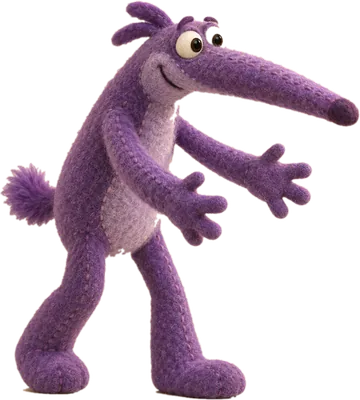
Firsty “Compares numbers by their first digit only, even when one number has more digits.”
What the student does. The student compares two numbers by their first digits and ignores that one number has more digits.
Firsty's answer 89
Correct answer 302
Firsty says: “8 is bigger than 3, so 89 is greater.”
Catch it: which friend is right?
Which number is greater: 1,045 or 987? Which friend is right? How do you know?
EmmaTricked by Firsty
987
“9 beats 1, so 987 is greater.”
KaiRight
1,045
“1,045 has a thousands place. 987 does not.”
Contrasting a right and a wrong answer is the CATCH move of the reteach.
Spot it in 10 seconds
The student picked the shorter number because its first digit is bigger.
Say it together: Count the digits first!
Reteach in 3 steps
Count the digits first. Line the numbers up in a place-value chart, ones under ones. More digits means greater; same number of digits, compare from the left.
- Write 89 and 302 in a chart, ones under ones.
- Say: 302 has a hundreds digit. 89 has no hundreds.
- Say: 3 hundreds is more than any number of tens. 302 is greater. Say it together: Count the digits first!
Still stuck? Write both numbers on grid paper, ones under ones, before comparing. Shade the empty places.
Standards
- CCSS 2.NBT.4
- CCSS 4.NBT.2
- Ontario Gr 3 B1.2
- Ontario Gr 4 B1.2
Evidence
Two Minnesota frameworks note students who think they only need to look at the first or the last digit when comparing and ordering numbers (Minnesota STEM Teacher Center, 2.1.1A) (Minnesota STEM Teacher Center, 3.1.1B).
Evidence status: Curriculum frameworks; no rates given.
Misconception 7: Comparing numbers by the last digit only
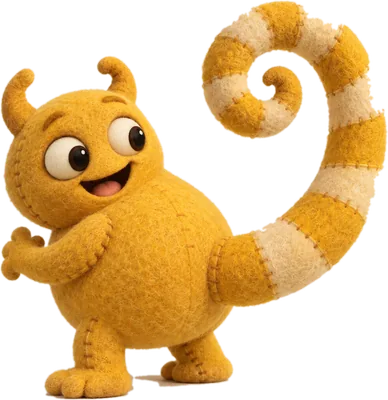
Lasty “Compares numbers by their last digit only.”
What the student does. The student compares two numbers by their ones digits.
Lasty's answer 419
Correct answer 452
Lasty says: “9 is bigger than 2, so 419 is greater.”
Catch it: which friend is right?
Which number is greater: 631 or 578? Which friend is right? How do you know?
AnaTricked by Lasty
578
“8 ones beats 1 one, so 578 is greater.”
TheoRight
631
“6 hundreds beats 5 hundreds.”
Contrasting a right and a wrong answer is the CATCH move of the reteach.
Spot it in 10 seconds
The student picked the number with the bigger ones digit, even though a bigger place already decides.
Say it together: Start at the biggest place!
Reteach in 3 steps
Start at the biggest place. Compare the digits from the left; only move right when the digits are the same.
- Write 452 and 419 in a chart, ones under ones.
- Point to the hundreds: 4 and 4, the same. Move right.
- Tens: 5 tens beats 1 ten. Stop. 452 is greater; the ones do not matter now. Say it together: Start at the biggest place!
Still stuck? Build both numbers with blocks. Compare the flats first, then the rods, then the cubes.
Standards
- CCSS 2.NBT.4
- CCSS 4.NBT.2
- Ontario Gr 3 B1.2
- Ontario Gr 4 B1.2
Evidence
The same Minnesota frameworks name looking only at the last digit when comparing numbers (Minnesota STEM Teacher Center, 2.1.1A) (Minnesota STEM Teacher Center, 3.1.1B).
Evidence status: Curriculum frameworks; no rates given.
Misconception 8: Rounding by chopping off the end
Choppy “Rounds by chopping off the end, so it always rounds down.”
What the student does. The student rounds by replacing every digit after the rounding place with a zero, so the number always rounds down.
Choppy's answer 50
Correct answer 60
Choppy says: “I chop off the 7 and put a 0. 50!”
Catch it: which friend is right?
Round 368 to the nearest ten. Which friend is right? How do you know?
LeoTricked by Choppy
360
“Chop the 8 off: 360.”
MayaRight
370
“368 is between 360 and 370. It is 2 away from 370.”
Contrasting a right and a wrong answer is the CATCH move of the reteach.
Spot it in 10 seconds
The rounded number is never bigger than the starting number, even when it should round up.
Say it together: Which ten is closer?
Reteach in 3 steps
Which ten is closer? Find the two tens (or hundreds) it sits between on a number line and pick the closer one. Exactly halfway rounds up.
- Draw a number line from 360 to 370. Mark 368.
- Count the jumps: 8 back to 360, 2 up to 370.
- Say: 370 is closer, so 368 rounds to 370. Chopping would give 360, the farther ten. Say it together: Which ten is closer?
Still stuck? Walk it on a floor number line: stand on the number, count steps to each end, and step to the closer one.
Standards
- CCSS 3.NBT.1
- CCSS 4.NBT.3
- Ontario Gr 3 B1.3
- Ontario Gr 4 B1.3
Evidence
Ashlock describes a student who decides rounding to the nearest ten means erasing the units digit and writing a zero, and notes the student is correct about half of the time (Ashlock, 2006, p. 17). The Minnesota rounding framework gives 57 rounded to the nearest ten as 50 as a common error (Minnesota STEM Teacher Center, 2.1.1B).
Evidence status: Teacher-education text plus a curriculum framework.
Free check
These free resources use the same monsters and to-scale diagrams, so a wrong answer points straight to a section of this guide. They are published outside this website and are not available here yet; this guide works on its own without them.
- FreePlace Value AssessmentA 10-question check where every wrong choice is the answer one of the eight tricks on this page gives, with a key that names the trick.
- FreePlace Value Exit TicketsThree exit tickets: writing numbers (Hundry, Skippy, Facer); base-ten blocks and trading (Facer, Shuffy, Crammy); comparing and rounding (Firsty, Lasty, Choppy).
- FreePlace Value WorksheetFour print-and-go practice pages, 26 items, with base-ten blocks drawn to exact scale.
Full pack
Place Value Monsters (Grades 2-4)
The full diagnostic and reteach kit for all eight misconceptions on this page: a 12-question Monster Check in two parallel forms (A to check, B to re-check), answer keys that name the monster behind every wrong choice, eight 15-minute small-group Takedown lessons with base-ten blocks, charts and number lines, eight colour posters, and the Monster Map Sheet (Google Sheets or Excel) that turns answer letters into dated groups.
This pack is published outside this website and is not available here yet.
- Fraction Monsters (Grades 3-4): The same design for fractions: eight misconceptions from equal parts to adding.
- Math Monsters Bundle (Grades 2-4): Fraction Monsters and Place Value Monsters together in one bundle.
Questions teachers ask
What are the most common place value misconceptions in Grades 2 to 4?
Eight documented ones are: writing each part of a number name in full (Hundry), leaving out the zero that holds an empty place (Skippy), reading a digit at its face value (Facer), reading base-ten groups in the order they sit (Shuffy), cramming ten or more into one place instead of trading (Crammy), comparing numbers by the first digit only (Firsty) or the last digit only (Lasty), and rounding by chopping off the end (Choppy). Each one is described in published research or curriculum frameworks, cited on this page. How common each one is in your class is not known until you check.
Why do students write 30025 for three hundred twenty-five?
They write each part of the number name as they hear it, in full, side by side: 300 and then 25. The Minnesota STEM Teacher Center lists this exact error (Minnesota STEM Teacher Center, 2.1.1A). Stack arrow cards so the smaller cards cover the zeros of the hundred: each place holds one digit, so the number is 325.
Why do students leave out the zero and write 24 for 204?
When the tens place is empty, they write one digit for each number word they say, so nothing holds the empty place (Price, 2002). Build the number on a place-value mat: every column gets a digit, and an empty column gets a zero. Cover the zero and ask whether the number that is left is the same.
How do I reteach place value misconceptions in a small group?
Take one misconception at a time with a small group. Show the wrong answer, then two friends' answers, one right and one tricked, and ask which friend is right and how they know. Build the idea with base-ten blocks, a place-value chart or a number line, practise with the model on the table, and finish with two exit items the misconception gets wrong. In a study of decimals, Grade 4 and 5 students who compared correct and incorrect examples learned more than students who compared two correct examples (Durkin & Rittle-Johnson, 2012). Each lesson in Place Value Monsters takes about 15 minutes.
Is this a standardized or research-validated test?
No. It is a classroom check of eight specific misconceptions, not a normed or validated test, and it does not cover every place value skill. Each misconception is documented in research or curriculum frameworks, but the named monsters are a teaching idea that no study has tested, and we make no claim that they raise scores.
Honest limits
- It is a classroom check of eight specific misconceptions, not a standardized, normed or validated test, and it does not cover every skill in the topic.
- A wrong answer that matches a misconception is a clue, not a diagnosis. Multiple-choice answers can be guessed, so one match means watch; use a group for one short lesson, date it, and close it when a re-check shows the idea is fixed.
- The monsters are a teaching idea for naming the error, never the child. We found no study that tests characters like these, so we treat them as a hypothesis and make no claim that they raise scores.
- The contrasting-examples finding behind the reteach comes from a study of decimals (74 students in Grades 4-5, one short session), not fractions or place value.
- Evidence strength differs by misconception (see each Evidence status). Shuffy rests on one small study; Firsty and Lasty come from curriculum frameworks that give no rates.
- Some of the research comes from other countries (Australia, Turkey, Germany); the German number-writing study involves a language that says numbers in a different order from English.
- Standards are listed by code (Common Core and the Ontario Mathematics curriculum, 2020). No ministry or standards body has reviewed or approved this guide.
Sources
Each source below was opened and read; the supporting quotes are kept on file. Accessed 24 Sep 2026.
- Minnesota STEM Teacher Center (SciMathMN, with the Minnesota Department of Education). Framework 2.1.1A Numbers, Representation, and Place Value: Student Misconceptions and Common Errors. https://stemtc.scimathmn.org/frameworks/211a-numbers-representation-and-place-value
- Herzog, M., & Fritz, A. (2022). Place value understanding explains individual differences in writing numbers in second and third graders but goes beyond. Frontiers in Education. https://www.frontiersin.org/journals/education/articles/10.3389/feduc.2021.642153/full
- Price, P. (2002). Children's difficulties with base-ten numbers: "Face-value" and "independent-place" constructs. Proceedings of the 25th annual MERGA conference, pp. 592-599. https://www2.merga.net.au/documents/RP_Price_2002.pdf
- National Center on Intensive Intervention at American Institutes for Research. Teaching Place-Value Concepts: Considerations for Instruction. https://intensiveintervention.org/sites/default/files/Place-Value%20Concepts-Considerations.pdf
- Onal, H., & Cilingir Altiner, E. (2021). The level of 7- and 8-years old children understanding of the place value concept. European Journal of Educational Sciences, 8(4), 28-52. https://files.eric.ed.gov/fulltext/EJ1331358.pdf
- Minnesota STEM Teacher Center. Framework 1.1.1A Place Value: Student Misconceptions and Common Errors. https://stemtc.scimathmn.org/frameworks/111a-place-value
- Minnesota STEM Teacher Center. Framework 3.1.1B Place Value to Compare and Order: Student Misconceptions and Common Errors. https://stemtc.scimathmn.org/frameworks/311b-place-value-compare-and-order
- Ashlock, R. B. (2006). Error Patterns in Computation: Using Error Patterns to Improve Instruction (9th ed.). Pearson Merrill Prentice Hall. Publisher sample chapter. https://www.pearsonhighered.com/assets/samplechapter/0/1/3/5/0135009103.pdf
- Minnesota STEM Teacher Center. Framework 2.1.1B Rounding Numbers: Student Misconceptions and Common Errors. https://stemtc.scimathmn.org/frameworks/211b-rounding-numbers
- Eedi Help Centre. The research behind Eedi (web article). https://help.eedi.co.uk/en/articles/7234087-the-research-behind-eedi
- Durkin, K., & Rittle-Johnson, B. (2012). The effectiveness of using incorrect examples to support learning about decimal magnitude. Learning and Instruction, 22(3), 206-214. ERIC EJ955374. https://api.ies.ed.gov/eric/?search=Durkin%20Rittle-Johnson%20incorrect%20examples%20decimal%20magnitude&format=json
- Dweck, C. (2016, January 11). Recognizing and overcoming false growth mindset. Edutopia. https://www.edutopia.org/blog/recognizing-overcoming-false-growth-mindset-carol-dweck