Free teacher guide · Grades 3-4 fractions
The 8 Fraction Misconceptions in Grades 3-4 (and how to reteach each one)
Each misconception below works like a rule: a student who follows it gets one predictable wrong answer. For each one you get the exact wrong answer, a diagram drawn to scale, a 10-second way to spot it, a 3-step small-group reteach and the research source.
At a glance
| # | Misconception | Example | Wrong answer | Correct | Standards |
|---|---|---|---|---|---|
| 01 | Counting unequal parts as if they were equalWonky | What fraction is shaded? | 1/3 | 1/2 | 3.NF.1 |
| 02 | Counting tick marks instead of jumps on a number lineTik | What number is at the dot? | 3/5 | 3/4 | 3.NF.2a |
| 03 | Thinking a bigger denominator means a bigger fractionBiggy | 1 pizza for 3 kids, or 1 pizza for 8 kids? | Each of the 8 kids gets more | Each of the 3 kids gets more | 3.NF.3d |
| 04 | Ignoring the size of the wholeWholey | 1/2 of a small pizza, or 1/2 of a large pizza? | They are the same amount | 1/2 of the large pizza is more | 3.NF.3d, 3.NF.2a |
| 05 | Adding the same number to the top and bottom to make an equivalent fractionPolly | 1/2 = ?/4 | 3/4 | 2/4 | 3.NF.3b, 4.NF.1 |
| 06 | Gap thinking: the same number of missing pieces means equalGappy | Which is more: 2/3 or 3/4? | They are the same amount | 3/4 is more | 4.NF.2 |
| 07 | Adding the numerators and adding the denominatorsStacker | 1/4 + 2/4 = ? | 3/8 | 3/4 | 4.NF.3a |
| 08 | Thinking bigger numbers make a bigger fractionGrower | Which is more: 4/8 or 1/2? | 4/8 is more | They are the same amount | 3.NF.3b, 4.NF.2 |
How to use this guide
Give a short check where every wrong choice is the answer one misconception gives, so a wrong answer names the misconception (the design Eedi describes for diagnostic questions (Eedi Help Centre)). Group students by misconception, write the date on the group, and reteach one misconception at a time. The reteach puts a wrong example next to a right one on purpose: in a study of decimals, students who compared correct and incorrect examples learned more than students who compared two correct examples (Durkin & Rittle-Johnson, 2012). Name the error, never the child: say “Biggy tricked me”, never “you're a Biggy”. Carol Dweck has warned against educators blaming children's mindsets for their failure to learn (Dweck, 2016, Edutopia).
Every reteach below follows the same five moves, about 15 minutes with 2-6 students:
- Meet. Show the monster's worked example. Students vote silently. Do not correct yet.
- Catch. Two friends, one right and one tricked. Ask: Which friend is right? How do you know?
- Beat. Build the idea with a model (fair-share drawing, strips or a number line) and say the catchphrase.
- Prove. Three practice items with the model available.
- Trap. Two exit items the monster would get wrong. Collect them. They are a check, not a grade.
How this guide was made. Every worked example on this page was computed from a written rule for that misconception (the correct method with exactly one step replaced by the trick) and checked by a script that fails if a printed answer, a diagram or a quoted instruction does not match. Every diagram is drawn to exact scale from the example's numbers. Every research claim links to a source that was opened and read; the evidence status under each misconception says how strong that evidence is.
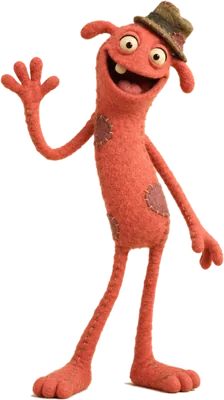
Misconception 1: Counting unequal parts as if they were equal
Wonky “Any cut makes fair shares.”
What the student does. The student names a fraction by counting pieces, without checking that the pieces are the same size.
Wonky's answer 1/3
Correct answer 1/2
Wonky says: “There are 3 pieces and 1 is shaded, so it is 1/3.”
Catch it: which friend is right?
What fraction of the bar is shaded? Which friend is right? How do you know?
MayaTricked by Wonky
1/2
“There are 2 pieces and 1 is shaded.”
LeoRight
1/4
“The small piece fits 4 times into the whole bar.”
Contrasting a right and a wrong answer is the CATCH move of the reteach.
Spot it in 10 seconds
The bottom number of the answer equals the number of pieces drawn, even though the pieces are different sizes.
Say it together: Check the cut before you count!
Reteach in 3 steps
Check the cut before you count. Fold or mark the bar into equal parts. Count only equal parts.
- Give each student a paper strip. Fold it in half, then in half again.
- Say: Now every part is the same size. These are fourths.
- Lay your strip under Leo's bar. Ask: How many small pieces fit in the whole bar? Say: Fractions need equal parts. Wonky forgets to check.
Still stuck? Cut real paper strips into unequal pieces and ask the student to share them fairly between friends. Fair sharing is the equal-parts idea.
Standards
- CCSS 3.NF.1
- Ontario Gr 3 B1.6
- Ontario Gr 4 B1.4
Evidence
Counting the shaded pieces and putting them over all the pieces, whatever the size of each part, is described as a fraction error (Fisher, NZCER set). Siemon reports students colouring in parts of a diagram with five unequal parts as though the parts were equal (Siemon, AAMT, p. 3).
Evidence status: Documented; the sources give no Grade 3-4 prevalence figure.
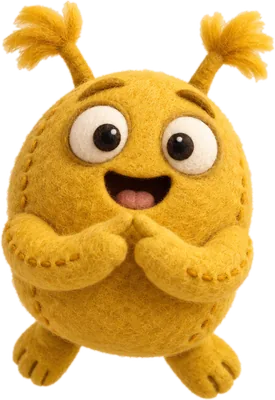
Misconception 2: Counting tick marks instead of jumps on a number line
Tik “Count the tick marks.”
What the student does. The student reads a number line by counting the tick marks from zero to one instead of the equal jumps between them.
Tik's answer 3/5
Correct answer 3/4
Tik says: “I see 5 tick marks, so the line is in fifths.”
Catch it: which friend is right?
What number is at the dot? Which friend is right? How do you know?
AnaTricked by Tik
2/4
“I see 4 tick marks from 0 to 1.”
SamRight
2/3
“There are 3 jumps from 0 to 1. The dot is 2 jumps from 0.”
Contrasting a right and a wrong answer is the CATCH move of the reteach.
Spot it in 10 seconds
The bottom number is exactly one more than the number of jumps between zero and one.
Say it together: Count the jumps, not the posts!
Reteach in 3 steps
Count the jumps, not the posts. The jumps from 0 to 1 give the bottom number. The jumps from 0 to the dot give the top number.
- Walk the floor number line. Hop from 0 to 1 and count each hop out loud.
- Say: One hop is one jump. The tick marks are only where we land.
- Draw arcs over each jump on the board. Number the arcs, not the marks.
Still stuck? Use a paper strip folded into equal parts laid on the number line, so each jump is a part the student can see.
Standards
- CCSS 3.NF.2a
- Ontario Gr 4 B1.4
Evidence
Counting tick marks instead of intervals to decide how many pieces the unit is split into is reported from Bright et al. (1988), for 16% at pretest (Cauté et al., 2026, p. 2). The same review notes that study had only eight children.
Evidence status: Documented but thin: one small study.
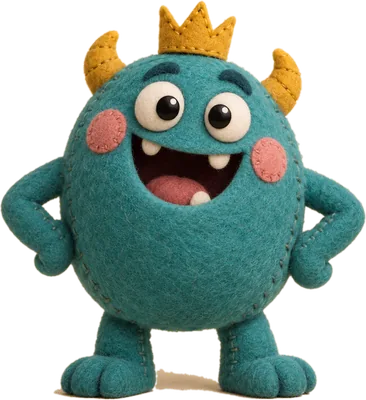
Misconception 3: Thinking a bigger denominator means a bigger fraction
Biggy “More sharers means a bigger share.”
What the student does. When two shares have the same top number, the student picks the one with the bigger bottom number, as if more sharers meant a bigger share.
Biggy's answer Each of the 8 kids gets more
Correct answer Each of the 3 kids gets more
Catch it: which friend is right?
Group 1: 4 kids share 2 subs. Group 2: 8 kids share 2 subs. Who gets more sub each? Which friend is right?
OmarTricked by Biggy
Each of the 8 kids gets more
“Group 2, because 8 is more than 4.”
PriyaRight
Each of the 4 kids gets more
“Group 1. More sharers means smaller shares.”
Contrasting a right and a wrong answer is the CATCH move of the reteach.
Spot it in 10 seconds
The top numbers match and the student chose the larger bottom number (the group with more sharers).
Say it together: More sharers, smaller shares!
Reteach in 3 steps
Draw the fair share. Cut the same whole for each group and put one share from each side by side.
- Give each pair two same-size paper circles. Fold one for 3 kids and one for 6 kids.
- Say: Hold up one share from each. Which is bigger?
- Say it together: More sharers, smaller shares!
Still stuck? Act it out: share 1 real cracker between 2 students, then another cracker between 4 students. Ask who got more.
Standards
- CCSS 3.NF.3d
- Ontario Gr 4 B1.5
Evidence
Gabriel and colleagues describe pupils judging 1/5 > 1/3 because a larger number is taken to mean a larger amount (Gabriel et al., 2013). Pearn lists 'larger denominator' among comparison misconceptions (Pearn, 2022, slides 23-24). The CCSS progression states the correct idea: when more identical pieces make the same whole, the pieces must be smaller (CCSS Progressions, NF 3-5, p. 4).
Evidence status: Well documented (whole-number bias).
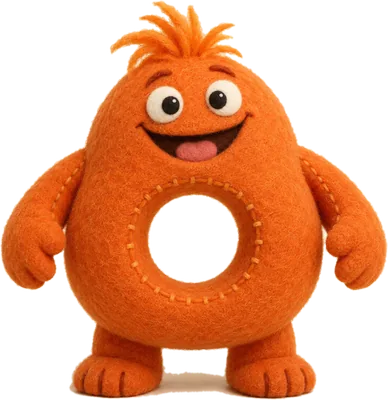
Misconception 4: Ignoring the size of the whole
Wholey “A half is a half, whatever the whole.”
What the student does. The student compares or names fractions without first naming the whole, so a half of a small pizza counts the same as a half of a large one.
Wholey's answer They are the same amount
Correct answer 1/2 of the large pizza is more
Wholey says: “Both ate 1/2, so they ate the same.”
Catch it: which friend is right?
The number line goes from 0 to 2. What number is at the dot? Which friend is right?
JinTricked by Wholey
3/8
“The line has 8 jumps and the dot is at 3.”
NiaRight
3/4
“The whole is 0 to 1. It has 4 jumps, and the dot is 3 jumps from 0.”
Contrasting a right and a wrong answer is the CATCH move of the reteach.
Spot it in 10 seconds
Halves (or any same fractions) of different-size wholes were called equal, or a number-line answer counts every jump on the line instead of the jumps from zero to one.
Say it together: Name the whole first!
Reteach in 3 steps
Name the whole first. Say 'The whole is ...' and trace it before you name or compare any fraction.
- Say: Before any fraction, we name the whole. Trace it with your finger.
- Put half of the small circle on top of half of the large circle. Ask: Same amount?
- On the number line, colour 0 to 1. Say: This is one whole. The line keeps going, but the whole does not.
Still stuck? Give the student two different-size paper strips and ask them to show 1/2 of each. Lay them side by side.
Standards
- CCSS 3.NF.3d
- CCSS 3.NF.2a
- Ontario Gr 4 B1.5
Evidence
The CCSS progression describes a fourth of a bigger pizza being more than a half of a smaller one, and says each fraction in a comparison must refer to the same whole (CCSS Progressions, NF 3-5, p. 4). On number lines, Cauté and colleagues report errors from treating the entire line as the unit (42% at pretest, 32% at posttest) in a small study (Cauté et al., 2026, p. 2).
Evidence status: Different-size wholes: documented. Number-line form: thin evidence (a small study).
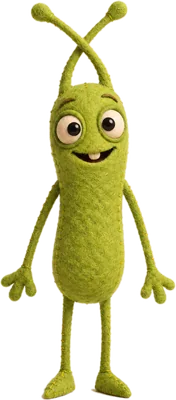
Misconception 5: Adding the same number to the top and bottom to make an equivalent fraction
Polly “Add the same number to the top and the bottom.”
What the student does. The student makes an 'equal' fraction by adding the same number to the numerator and the denominator instead of multiplying both by the same number.
Polly's answer 3/4
Correct answer 2/4
Polly says: “2 + 2 = 4 on the bottom, so 1 + 2 = 3 on the top.”
Catch it: which friend is right?
2/3 = ?/6. Which friend is right? How do you know?
EliTricked by Polly
5/6
“I added 3 to the top and 3 to the bottom.”
FarahRight
4/6
“I cut every third into 2 pieces. Now there are 2 times as many pieces, and 2 times as many are shaded.”
Contrasting a right and a wrong answer is the CATCH move of the reteach.
Spot it in 10 seconds
The new top number is the old top number plus whatever was added to get the new bottom number.
Say it together: Split, don't add!
Reteach in 3 steps
Split every piece the same way. The number of pieces is multiplied, so the top and the bottom are both multiplied by the same number.
- Shade 2/3 on a thirds strip. Cut each third in half.
- Ask: How many pieces now? How many shaded?
- Say: We did not add pieces. We split every piece. Split, don't add!
Still stuck? Ask: Is 3/4 the same size as 1/2? Put the two strips side by side. Polly's answer is not the same size.
Standards
- CCSS 3.NF.3b
- CCSS 4.NF.1
- Ontario Gr 3 B1.7
Evidence
Mitchell and Horne suggest that gap thinking may reveal an additive, not multiplicative, early idea of equivalence (Mitchell & Horne, 2010). Hansen and colleagues found 2 students (11%) explaining equivalence as addition (Hansen et al., iTalk2Learn, p. 5).
Evidence status: Additive equivalence is documented; the exact add-the-same-number rule is our inference from these sources.
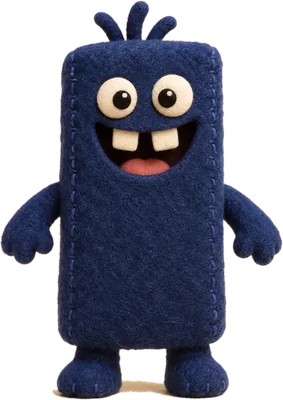
Misconception 6: Gap thinking: the same number of missing pieces means equal
Gappy “Same gap, same size.”
What the student does. The student compares fractions by how many pieces are missing from a whole, not by how big those missing pieces are.
Gappy's answer They are the same amount
Correct answer 3/4 is more
Gappy says: “Both are missing 1 piece, so they are the same.”
Catch it: which friend is right?
Which is more: 5/6 or 7/8 of the same bar? Which friend is right?
RajTricked by Gappy
They are the same amount
“They are equal. Both are missing 1 piece.”
SofiaRight
7/8 is more
“7/8 is more. The missing piece is 1/8, and an eighth is smaller than a sixth.”
Contrasting a right and a wrong answer is the CATCH move of the reteach.
Spot it in 10 seconds
Two fractions that are each the same number of pieces away from a whole were called equal.
Say it together: Mind the size of the gap!
Reteach in 3 steps
Look at the size of the gap, not the number of missing pieces. The smaller gap is closer to one whole.
- Line up a sixths strip and an eighths strip. Shade 5/6 and 7/8.
- Say: Put your finger on each gap. Which gap is smaller?
- Say: Smaller gap, closer to a whole. Mind the size of the gap!
Still stuck? Compare each fraction to 1/2 first on a number line, then look at the gap to 1.
Standards
- CCSS 4.NF.2
- Ontario Gr 4 B1.5
Evidence
Mitchell and Horne cite Post and Cramer (1987) on Grade 4 children who believe 3/4 and 2/3 are equal, and Clarke and Roche (2009), who found 29% of Grade 6 children gave a gap-thinking explanation when comparing 5/6 and 7/8 (Mitchell & Horne, 2010). Pearn shows the smaller-gap-is-bigger version of the same idea (Pearn, 2022, slides 23-24).
Evidence status: Well documented, from Grade 4 to Grade 6.
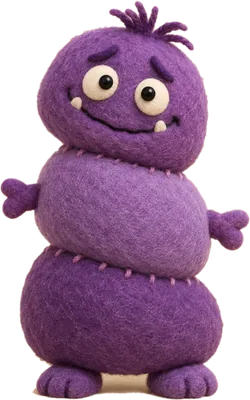
Misconception 7: Adding the numerators and adding the denominators
Stacker “Add the tops and add the bottoms.”
What the student does. The student adds fractions by adding the top numbers and adding the bottom numbers.
Stacker's answer 3/8
Correct answer 3/4
Stacker says: “Tops: 1 + 2 = 3. Bottoms: 4 + 4 = 8.”
Catch it: which friend is right?
2/6 + 3/6 = ? Which friend is right? How do you know?
TheoTricked by Stacker
5/12
“2 + 3 is 5 and 6 + 6 is 12.”
UmaRight
5/6
“2 sixths and 3 sixths make 5 sixths. The pieces are still sixths.”
Contrasting a right and a wrong answer is the CATCH move of the reteach.
Spot it in 10 seconds
The bottom number of the answer is the two bottom numbers added together, so the pieces seem to shrink when you add.
Say it together: Same-size pieces, same bottom number!
Reteach in 3 steps
Say it in words: 2 sixths + 3 sixths = 5 sixths. Joining pieces does not change their size, so the bottom number stays the same.
- Put 2 sixth-pieces and 3 sixth-pieces together on one strip.
- Ask: What size are the pieces now? How many are there?
- Say: Same-size pieces, same bottom number! Sense check: 3/6 is already a half. Can the answer be less than a half? 5/12 is less than a half.
Still stuck? Use a number line: hop 2/6, then hop 3/6 more. Where do you land?
Standards
- CCSS 4.NF.3a
Evidence
NFER reports that 10% of lower-achieving pupils added the numerators and the denominators on a like-denominator question, giving 6/14 (NFER Assessment Hub). Gabriel and colleagues report 62% of 4th-graders making this mistake with different denominators (Gabriel et al., 2013), and Schumacher and Malone found whole-number bias more likely on unlike denominators (Schumacher & Malone, 2017).
Evidence status: Well documented; less common with like denominators, as in this example.
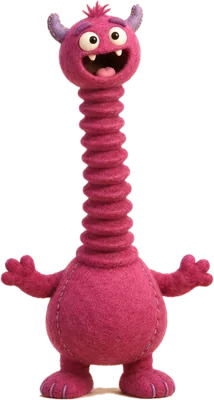
Misconception 8: Thinking bigger numbers make a bigger fraction
Grower “Bigger numbers make a bigger fraction.”
What the student does. The student judges one fraction bigger because both of its numbers are bigger, without picturing the amount.
Grower's answer 4/8 is more
Correct answer They are the same amount
Grower says: “4 and 8 are bigger numbers than 1 and 2.”
Catch it: which friend is right?
Which is more: 6/8 or 3/4 of the same pan? Which friend is right?
WesTricked by Grower
6/8 is more
“6/8 is more. 6 and 8 are bigger numbers.”
YukiRight
They are the same amount
“They are the same. Cut each fourth in half and 3 fourths become 6 eighths.”
Contrasting a right and a wrong answer is the CATCH move of the reteach.
Spot it in 10 seconds
The student chose the fraction written with the larger numbers, even though the two amounts are equal or the other one is bigger.
Say it together: Big numbers, same size!
Reteach in 3 steps
Look at the amount, not the numbers. Put both fractions on the same number line or strip and see where they land.
- Draw a number line in fourths above one in eighths.
- Mark 3/4 on top and 6/8 below. Ask: Same point?
- Say: Bigger numbers can mean more, smaller pieces. Big numbers, same size!
Still stuck? Build both amounts with fraction strips and lay them side by side. The longer strip is more, whatever the numbers say.
Standards
- CCSS 3.NF.3b
- CCSS 4.NF.2
- Ontario Gr 3 B1.7
Evidence
Schumacher and Malone describe students who assume a fraction gets bigger as the whole numbers in it get bigger (Schumacher & Malone, 2017). Gabriel and colleagues suggest pupils compare numerators and denominators separately (Gabriel et al., 2013).
Evidence status: Well documented as whole-number bias; the both-numbers-bigger rule is our working definition.
Free check
These free resources use the same monsters and to-scale diagrams, so a wrong answer points straight to a section of this guide. They are published outside this website and are not available here yet; this guide works on its own without them.
- FreeIntroduction to Fractions AssessmentAn 8-question check on equal parts, naming fractions, fair shares and the number line. Every wrong choice is the answer one of four tricks gives (Wonky, Tik, Biggy, Wholey), and the key names it.
- FreeIntroduction to Fractions Exit TicketsFour half-page exit tickets, one for each early trick: Wonky, Tik, Biggy and Wholey.
- FreeIntroduction to Fractions Task Cards12 task cards with to-scale diagrams and a monster tip on each. Practice cards, not an assessment.
- FreeIntroduction to Fractions WorksheetFour print-and-go practice pages: equal parts, naming the shaded part, fair shares and the number line, with Wonky and Tik tips.
- FreeIntroduction to Fractions Teacher GuideA first fractions lesson in four steps, with class language for four of the monsters.
- FreeEquivalent Fractions Teacher GuideA lesson built around Polly's trick (adding the same number to the top and bottom), with a which-friend-is-right contrasting case.
Full pack
Fraction Monsters (Grades 3-4)
The full diagnostic and reteach kit for all eight misconceptions on this page: a 12-question Monster Check in two parallel forms (A to check, B to re-check), answer keys that name the monster behind every wrong choice, eight 15-minute small-group Takedown lessons, eight colour posters, and the Monster Map Sheet (Google Sheets or Excel) that turns answer letters into dated groups.
This pack is published outside this website and is not available here yet.
On this site: the free Fraction Repair Lab (a unit-fraction lesson for Grades 4-6) and, as a separate product, the Fraction Diagnostic & Repair Lab for Grades 4-6. Neither is the pack described above.
- Place Value Monsters (Grades 2-4): The same design for place value: eight misconceptions from writing numbers to rounding.
- Math Monsters Bundle (Grades 2-4): Fraction Monsters and Place Value Monsters together in one bundle.
Questions teachers ask
What are the most common fraction misconceptions in Grades 3 and 4?
Eight documented ones are: counting unequal parts as if they were equal (Wonky), counting tick marks instead of jumps on a number line (Tik), thinking a bigger denominator means a bigger fraction (Biggy), ignoring the size of the whole (Wholey), adding the same number to the top and bottom to make an equivalent fraction (Polly), gap thinking (Gappy), adding the numerators and the denominators (Stacker), and thinking bigger numbers make a bigger fraction (Grower). Each one is described in published research or curriculum documents, cited on this page. How common each one is in your class is not known until you check.
Why do students think 1/8 is bigger than 1/3?
Because 8 is a bigger number than 3, and they read the fraction like a whole number. Researchers call this whole-number bias (Gabriel et al., 2013). With the same top number, more sharers means smaller shares: when 3 kids share a pizza, each gets more than when 8 kids share the same-size pizza. Draw both shares from the same-size whole and put them side by side.
How can I check for fraction misconceptions quickly?
Use multiple-choice questions where each wrong choice is the exact answer one misconception gives, so the wrong answer itself names the misconception. Eedi describes this design for diagnostic questions (Eedi Help Centre). The free Fraction Check linked on this page works this way for Wonky, Tik, Biggy and Wholey; the full Monster Check covers all eight.
How do I reteach a fraction misconception in a small group?
Take one misconception at a time with a small group. Show the wrong answer, then two friends' answers, one right and one tricked, and ask which friend is right and how they know. Build the idea with a model (a fair-share drawing, fraction strips or a number line), practise with the model on the table, and finish with two exit items the misconception gets wrong. In a study of decimals, Grade 4 and 5 students who compared correct and incorrect examples learned more than students who compared two correct examples (Durkin & Rittle-Johnson, 2012). Each lesson in Fraction Monsters takes about 15 minutes.
Is this a standardized or research-validated test?
No. It is a classroom check of eight specific misconceptions, not a normed or validated test, and it does not cover every fraction skill. Each misconception is documented in research or curriculum documents, but the named monsters are a teaching idea that no study has tested, and we make no claim that they raise scores.
Honest limits
- It is a classroom check of eight specific misconceptions, not a standardized, normed or validated test, and it does not cover every skill in the topic.
- A wrong answer that matches a misconception is a clue, not a diagnosis. Multiple-choice answers can be guessed, so one match means watch; use a group for one short lesson, date it, and close it when a re-check shows the idea is fixed.
- The monsters are a teaching idea for naming the error, never the child. We found no study that tests characters like these, so we treat them as a hypothesis and make no claim that they raise scores.
- The contrasting-examples finding behind the reteach comes from a study of decimals (74 students in Grades 4-5, one short session), not fractions or place value.
- Evidence strength differs by misconception (see each Evidence status). Tik and the number-line form of Wholey rest on one small study; Polly's exact rule and Grower's both-numbers-bigger rule are our working definitions of documented errors.
- Some of the research comes from other grades or countries: gap thinking was measured in Grade 6, and the NFER figure is from Year 6 pupils in England.
- Standards are listed by code (Common Core and the Ontario Mathematics curriculum, 2020). No ministry or standards body has reviewed or approved this guide.
Sources
Each source below was opened and read; the supporting quotes are kept on file. Accessed 24 Sep 2026.
- Fisher, J. Fractions: Partitioning and the part-whole concept. set: Research Information for Teachers (NZCER). https://www.nzcer.org.nz/nzcerpress/set/articles/fractions-partitioning-and-part-whole-concept
- Siemon, D. Partitioning - The missing link in building fraction knowledge and confidence. RMIT University; AAMT Primary Standards resource. https://primarystandards.aamt.edu.au/content/download/806/19857/file/vc-siemon.pdf
- Cauté, M., Potier Watkins, C., He, C., & Dehaene, S. (2026). Characterizing error types in the comprehension of fractions: The number line test. Journal of Experimental Child Psychology, 263. doi:10.1016/j.jecp.2025.106373 https://excellolab.org/wp-content/uploads/2025/11/Characterizing-error-types-in-the-comprehension-of-fractions-The-number-line-test.pdf
- Gabriel, F., Coché, F., Szucs, D., Carette, V., Rey, B., & Content, A. (2013). A componential view of children's difficulties in learning fractions. Frontiers in Psychology, 4, 715. doi:10.3389/fpsyg.2013.00715 https://pmc.ncbi.nlm.nih.gov/articles/PMC3794363/
- Pearn, C. (2022). Identifying and addressing common fraction misconceptions. Mathematical Association of Victoria primary conference, session B1 (slide deck). https://www.mav.vic.edu.au/Tenant/C0000019/00000001/downloads/Professional%20learning/2022/primary-conference/B1-PEARN_Friday_B1_Identifying%20and%20addrssing%20common%20fraction%20misconceptions.pdf
- Common Core Standards Writing Team (2011, 12 August draft). Progressions for the Common Core State Standards in Mathematics: Number and Operations - Fractions, 3-5. https://www.isbe.net/Documents/number-fractions-3-5.pdf
- Mitchell, A., & Horne, M. (2010). Gap thinking in fraction pair comparisons is not whole number thinking: Is this what early equivalence thinking sounds like? MERGA 33 Proceedings, pp. 414-421 (ERIC ED520918). https://files.eric.ed.gov/fulltext/ED520918.pdf
- Hansen, A., Mavrikis, M., Holmes, W., & Geraniou, E. Designing interactive representations for learning fraction equivalence. London Knowledge Lab, UCL Institute of Education (iTalk2Learn project paper). https://www.italk2learn.eu/wp-content/uploads/2015/11/Designing-interactive-representations-for-learning-fraction-equivalence.pdf
- NFER Assessment Hub. What are the common mistakes when adding fractions? (web article). https://www.nfer.ac.uk/assessment-hub/what-are-the-common-mistakes-when-adding-fractions/
- Schumacher, R. F., & Malone, A. S. (2017). Error patterns with fraction calculations at fourth grade as a function of students' mathematics achievement status. The Elementary School Journal, 118(1), 105-127. doi:10.1086/692914 https://pmc.ncbi.nlm.nih.gov/articles/PMC5690543/
- Eedi Help Centre. The research behind Eedi (web article). https://help.eedi.co.uk/en/articles/7234087-the-research-behind-eedi
- Durkin, K., & Rittle-Johnson, B. (2012). The effectiveness of using incorrect examples to support learning about decimal magnitude. Learning and Instruction, 22(3), 206-214. ERIC EJ955374. https://api.ies.ed.gov/eric/?search=Durkin%20Rittle-Johnson%20incorrect%20examples%20decimal%20magnitude&format=json
- Dweck, C. (2016, January 11). Recognizing and overcoming false growth mindset. Edutopia. https://www.edutopia.org/blog/recognizing-overcoming-false-growth-mindset-carol-dweck