Fraction Diagnostic & Repair Lab
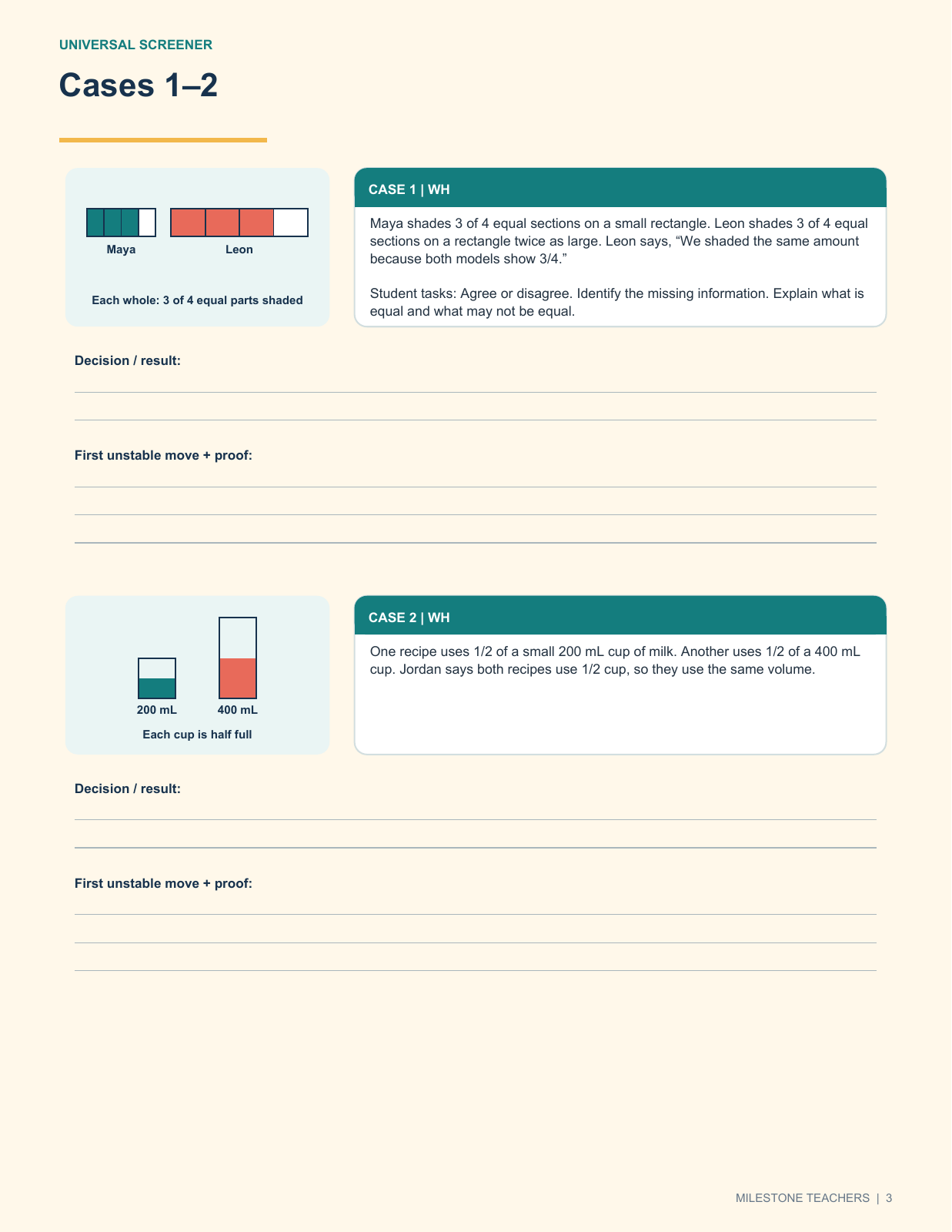
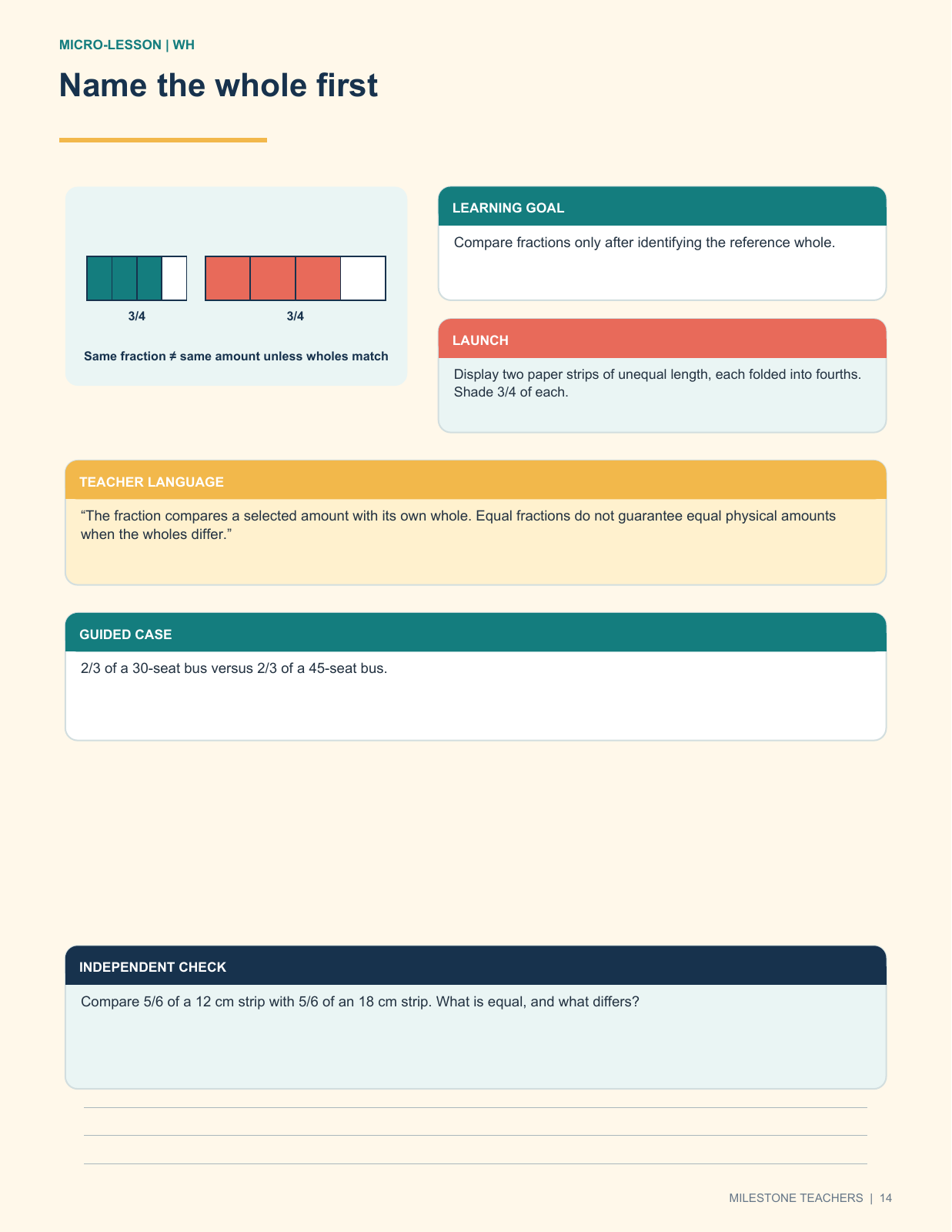
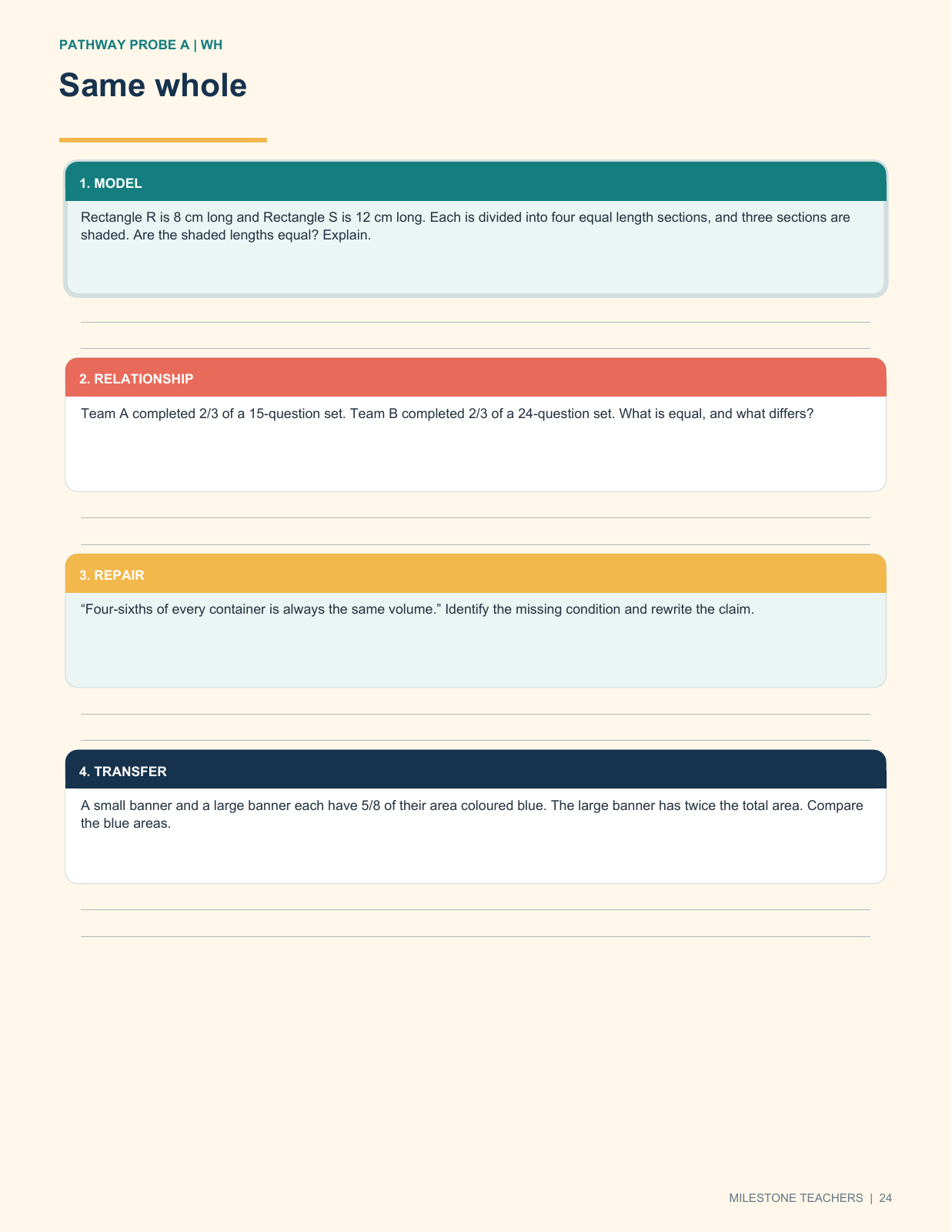
Find a useful next teaching step from students’ fraction reasoning. Start with a 20-item screener across ten pathways, choose a matched micro-lesson, then re-check with a parallel probe. The Grades 4–6 package includes a student book, teacher guide and keys, ten micro-lessons, 30 four-task probes (120 tasks), Quick Check Forms A and B, and two Excel workbooks for tracking and grouping. There are 133 printable PDF pages across four PDFs, plus 47 editable teaching slides. Two HTML tools provide a student companion and three Fraction Repair Lab lessons: unit size, equivalence and addition. The lab also has a nine-page paper lesson pack, included in the PDF total. Choose pathways for student readiness; explanations and teacher judgment guide next steps, rather than a score alone. PDFs are printable, not fillable forms. Local HTML use depends on school browser policy. The selected pages below show one diagnose–teach–re-check sequence from the current v1.2 download.
USD $12.95
The licence included with each resource governs classroom use and sharing. Purchase terms cover payment and download access.
Included files
- Fraction-Diagnostic-with-Repair-Lab-v1.2.zip
Instant download after checkout · Refund for a missing file, duplicate purchase, incorrect charge, or a resource that does not match its description · Made by an Ontario Certified Teacher
Resource licence and purchase terms · Browse resources
Look inside
Selected pages from this resource.