




Ecosystems and water quality · Grades 7 to 9 science
About 2,100 fish are dead. Your class finds out why.
The Inquiry Room: What Happened at Wren Lake? is a class inquiry on the projector. Your students are the panel: they question six witnesses, read thirteen exhibits, agree on what killed the fish, then answer hard questions about their finding.
Sold on Teachers Pay Teachers. The price, checkout and download are on the listing.
Six people. Each knows part of why.
Each witness tells the truth as they see it and holds something back until the class asks the right question or shows them the right record.
- Marcel Dubois: Fishing guide who found the fish on 29 July
- Gord Petrenko: Farms Field 6, beside Wren Creek
- Ravi Sandhu: Runs the town's wastewater lagoon
- Helen Fraser: Speaks for the cottage owners around South Bay
- Dr. Amy Chen: Counted the fish and measured the water on 29 July
- Tess Lavallee: Grade 8 student who has measured the oxygen at her family's dock since 1 July
A full ecosystems inquiry in four lessons
- Lesson 1, optional: What fish need from water: oxygen, photosynthesis and respiration, and reading a graph.
- Lessons 2 and 3: The hearing. Teams question the witnesses, open the exhibits, run a model of the lake through July, agree on what killed the fish and who is responsible for what, then answer hard questions about their finding.
- Lesson 4: What really happened, step by step, and the assessment.
Question the first witness
Open the room the way your class will: the arrival, the town's briefing, and Marcel Dubois on the stand. Type a question the way a student would ask it; the room offers the closest written questions, and Marcel answers. Ask for his records, show him what you find, and watch what he admits.
This free room stops at the first witness. The other five witnesses, the rest of the hearing and the printed kit are in the download.
What is in the download
One ZIP, eleven files.
- The inquiry room: One folder: unzip it, open it and double-click index.html. It opens in a web browser (tested in Microsoft Edge and Firefox) and works with no internet. No accounts, nothing sent anywhere.
- Start-here page and a 32-page teacher guide: Set-up (15 minutes the day before, 5 before class), a minute-by-minute plan, the teacher's key, the science in brief, what to listen for, supports, and what to do when the room is loud.
- Four lesson plans and a pacing page: Five periods, four, or a two-period express.
- Student pages: A two-page primer, a two-page panel notebook, and all thirteen exhibits to print.
- Assessment pack: A quiz in two forms (24 marks each), an exit ticket, a graph-reading page, and four extensions, including a short sourced reading about a real Canadian lake.
- Answer keys and a rubric: A sample level 3 and level 4 answer for every quiz short answer, the exit ticket and the graph page's written answers, and a four-level rubric.
- A privacy note: One page you can hand to your principal.
What they learn
Photosynthesis, respiration and decomposition in a whole lake. How nutrients move through a watershed and what people add to it. How to read a graph and a table. The difference between a cause and a blame.
Curriculum
- Manitoba Grade 7 Science: SCI.7.E.18, E.22, E.23, C.1, D.1
- Ontario Grade 9 Science (SNC1W): B2.3, B2.4, B2.5
- Alberta Grade 7 Science: Unit A
- British Columbia Science: Grades 8 and 9
- NGSS: MS-LS2-1, MS-LS2-3, MS-LS2-4
The teacher guide quotes each expectation.
Before you buy
- You need one computer and a projector or large screen, and a printer for the student pages.
- Wren Lake and its people are invented. The science is real and the guide lists the sources it was checked against. Sample values written for the case are labelled.
- The room answers from written questions. If a class asks something that is not there, it offers the closest ones.
- Made for Grades 7 to 9.
Questions teachers ask
- How long does it take?
- Four lessons as written: Lesson 1, optional background, is 40 minutes, and Lessons 2, 3 and 4 are 45 minutes each. The pacing page also gives a five-period plan and a two-period express. Set-up is about 15 minutes the day before and 5 minutes before class.
- Does it need the internet?
- No. The room is one folder: unzip the download, open the folder and double-click index.html. It opens in a web browser (tested in Microsoft Edge and Firefox) and makes no network connection. The free first witness on this page runs on this website, so it needs a connection.
- Which curriculum does it match?
- Manitoba Grade 7 Science (SCI.7.E.18, E.22, E.23, C.1 and D.1), Ontario Grade 9 Science, SNC1W (B2.3, B2.4 and B2.5), Alberta Grade 7 Science Unit A, British Columbia Science 8 and 9, and NGSS MS-LS2-1, MS-LS2-3 and MS-LS2-4. The teacher guide quotes each expectation. It lists none for Ontario Grades 7 and 8: check your own curriculum document.
- What do students hand in?
- A written finding of their own on page 2 of the panel notebook: what killed the fish, their three best pieces of evidence, why that evidence means what they say, who is responsible for what, one thing the town should do and one thing they would still measure. That is claim, evidence and reasoning, marked with a four-level rubric. The assessment pack adds a quiz in two forms (24 marks each), an exit ticket and a graph-reading page.
- Can I try it first?
- Yes. The free room on this page opens the way your class will see it: the arrival, the town's briefing and the first witness, Marcel Dubois, on the stand, with written questions. It stops at the first witness. The TpT listing's preview shows real pages from the download.
- Is it AI? Do students talk to a chatbot?
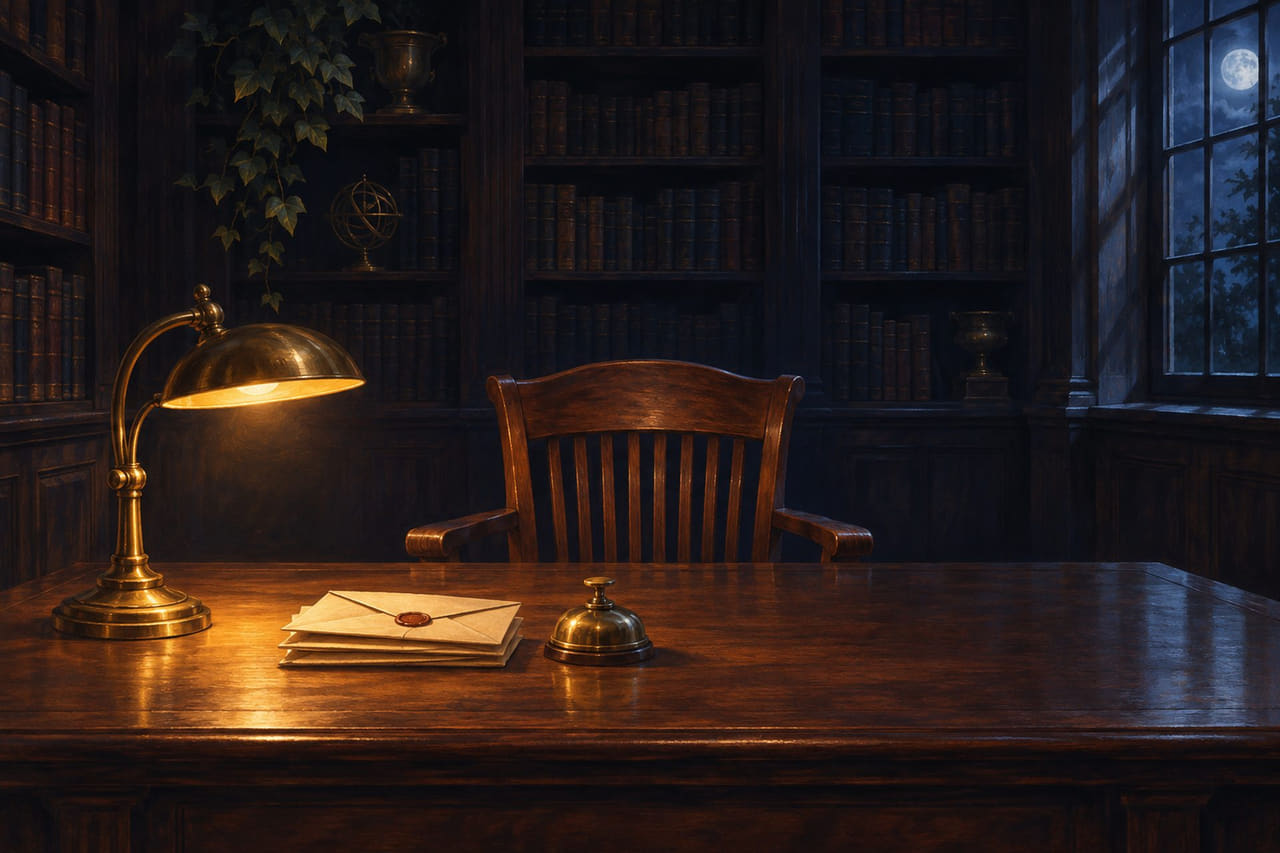
- The room in the download does not use AI to answer. Every answer was written in advance, and the science in it was checked against published sources; as the clerk types a team's question, the room offers the closest written questions and the witness answers. It makes no network connection, and nothing the class types leaves the teacher's computer. The portraits and the room painting were made with an image generator.
- What do I need in the classroom?
- One computer and a projector or large screen, and a printer for the student pages. Students need no accounts and no devices.
- Is Wren Lake a real place?
- No. Wren Lake and its people are invented. The science is real, and the teacher guide lists the sources it was checked against. Sample values written for the case are labelled.
Read the free teaching guide: how to run a fish-kill inquiry with CER
Wren Lake and every person in it are invented; the science is real. The six portraits and the room painting were made with an image generator for Milestone Teachers. The screens and pages shown here are the product's own.